Articles
45 plain-English guides on file size, compression, media and transfer speed. Search by keyword or filter by topic.
Showing all 45 articles
No guide matches those words. Try fewer words, or choose All topics.

What Is Data Compression? A Plain-English Guide
How files shrink without losing their meaning, why some cannot, and how to measure the savings.

Lossless vs. Lossy Compression: What You Keep and What You Lose
Where lossless and lossy compression differ, with a worked size example and rules for choosing.
How Repeated Patterns Let Files Shrink
Runs, repeated strings and near-equal neighbors are what compressors look for, shown with hand-checkable examples.

Huffman Coding Explained with a Worked Example
A 14-character example shows how Huffman coding assigns short codes to common symbols, with every bit counted.
How DEFLATE Works: The Method Behind ZIP, gzip and PNG
DEFLATE in plain words: pointers to earlier data, Huffman codes, and the wrappers that make ZIP, gzip and PNG.

Compression Ratio Explained: How to Calculate and Read It
Ratio, percent saved and space saved from the same two sizes, with a conversion table and common traps.
Why Some Files Barely Shrink When You Compress Them
Why photos, music and archives resist compression, and the counting argument that proves no method wins every time.

What Is a Codec? Encoding and Decoding Explained
What a codec is, why raw audio and video are too big without one, and how a codec differs from a file type.

Data Compression vs. Audio Compressors: Two Meanings of "Compressor"
Why "compressor" names two unrelated things, with the controls of the audio kind explained and sized by example.

JPEG vs. PNG: When Each Format Makes Sense
A plain comparison of lossy and lossless image files, with rules for photographs, screenshots, logos and transparent graphics.

WebP and AVIF: What the Newer Image Formats Offer
How the two newer image formats work, how to read their size-saving claims, and why a fallback file still matters.

What Is a Megapixel? Resolution and File Size Explained
Turn pixel dimensions into megapixels, link them to file size, and see why doubling the count does not double the detail.

Color Depth Explained: 8-bit, 24-bit and Beyond
What bits per pixel and bits per channel mean, how many colors each depth allows and how depth changes uncompressed file size.

PPI vs. DPI: Pixels, Print Size and Screen Size
Define PPI and DPI precisely, calculate print size from pixel dimensions, and see why the density number does not change file size.

Aspect Ratios Explained: 16:9, 4:3, 1:1 and How to Resize
Reduce any width and height to a ratio, resize while keeping the shape, and choose between cropping and bars.

How Big Is an Uncompressed Image? A Worked Example
A step-by-step calculation of raw image size, with decimal and binary units, bit-depth variants and a library-sized estimate.

Vector vs. Raster Graphics: Why SVG Files Stay Small
Compare pixel grids with drawing instructions, count the bytes of a small SVG, and learn when vector files stop being small.

Choosing Image Dimensions for the Web
Match pixel dimensions to display size and screen density, then estimate what oversized pictures cost in bytes and seconds.
What Is Bitrate? Audio and Video Explained
Bitrate counts the data used per second of playback, so it sets file size directly. Units, formula and pitfalls.
Sample Rate and Bit Depth: Where CD Audio's 1,411 kbps Comes From
CD audio's 1,411 kbps is three numbers multiplied together. Derive it step by step and see what each setting costs.

How Big Is an Audio File? Size by Minute and Hour
Tables of audio size per minute and per hour, plus the two formulas behind them, for uncompressed and compressed audio.

Lossless and Lossy Audio Formats: WAV, FLAC, MP3 and AAC
WAV is uncompressed, FLAC is lossless, MP3 and AAC are lossy. See what sets each format's size and how to calculate it.

Codec vs. Container: What MP4, MKV and WebM Actually Are
MP4, MKV and WebM are containers, not codecs. Learn what each layer does and which one sets the size of the file.

How to Calculate Video File Size from Bitrate and Duration
A step-by-step method to turn a bitrate and a running time into a file size, with examples in MB and GiB.

How to Choose a Bitrate for a Target File Size
Work backward from a size limit to the bitrate that fits, with a method, two examples and a note on headroom.

Constant vs. Variable Bitrate: What Changes for File Size
Constant bitrate gives a predictable size, variable bitrate gives an average. A labeled example shows the gap.

How Much Data Does Streaming Use per Hour?
Data per hour depends on the stream's bitrate. Example rates from 1 to 8 Mbps, and the step from hourly to monthly use.
How ZIP Files Work: What Happens When You Compress a Folder
Each file is compressed on its own, then an index is added at the end of the archive.

Why PDF Files Get Large and What Shrinks Them
Image pixels, embedded fonts and saved edits explain most of a PDF's size.
Decimal vs. Binary Units: GB vs. GiB Explained
The same capacity can read 256 GB or 238.42 GiB, and both are correct.
Why Your 1 TB Drive Shows Less Space
A change of unit, from decimal TB to binary GiB, explains the smaller number.
Bits vs. Bytes: How to Tell Kb from KB
Capital B means bytes, lowercase b means bits, and the factor between them is 8.

Plain Text, Rich Text and Spreadsheets: What Drives Document Size
Plain text is characters times bytes each; formatting, tables and pictures add more.

How to Plan Backup Storage Space
Capacity equals data size times copies times growth, adjusted for compression and versions.
Long-Term File Formats: Choosing Formats That Last
Disclosure, transparency and dependencies tell you more than a format's age or fame.
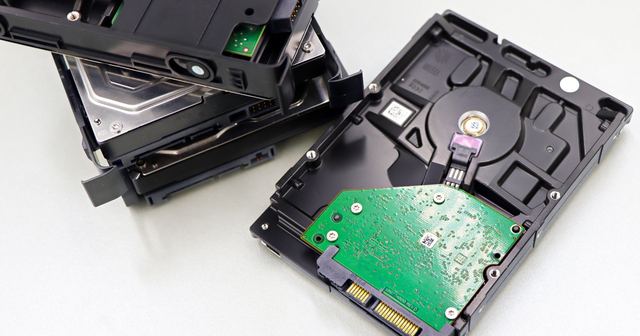
Planning Storage for Photo, Music and Video Libraries
Three formulas and one table turn a library's contents into a storage total.

Mbps vs. MB/s: Why Downloads Look 8 Times Slower
Why a 100 Mbps connection shows 12.5 MB/s in a download, and how to convert between the two units.
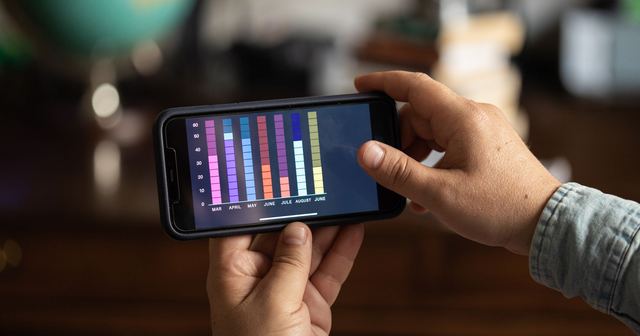
How to Calculate Download Time for Any File
A six-step method for turning file size and connection speed into a transfer time, with worked numbers.

Upload Time: Why Sending Files Can Take Longer
Separate upload and download speeds, the FCC's figures on asymmetry, and how to estimate a send time.
Bandwidth vs. Throughput vs. Latency
What each term measures, with standards definitions, a labeled example and a rule for choosing one.
Protocol Overhead: Why Real Speeds Fall Below the Advertised Rate
Header sizes from the TCP and IP specifications, per-packet arithmetic and how to choose an overhead assumption.

Web Page Weight: What It Is and Why It Matters
What page weight counts, where the bytes go in the 2025 medians, and how weight turns into waiting time.

HTTP Compression: gzip and Brotli for Web Pages
The Accept-Encoding and Content-Encoding exchange, a gzip and Brotli comparison from the specifications, and a size example.
Data Caps Explained: How to Budget a Monthly Allowance
What a data cap is, the monthly usage formula, a table of example totals and a five-step budget method.
How to Measure a Real Transfer Speed with a Known File
A step-by-step method using a known file, a worked five-run example and the traps that distort a result.


